I give the images of Japan a shadow.
Popsan
Light in the shadow of the face
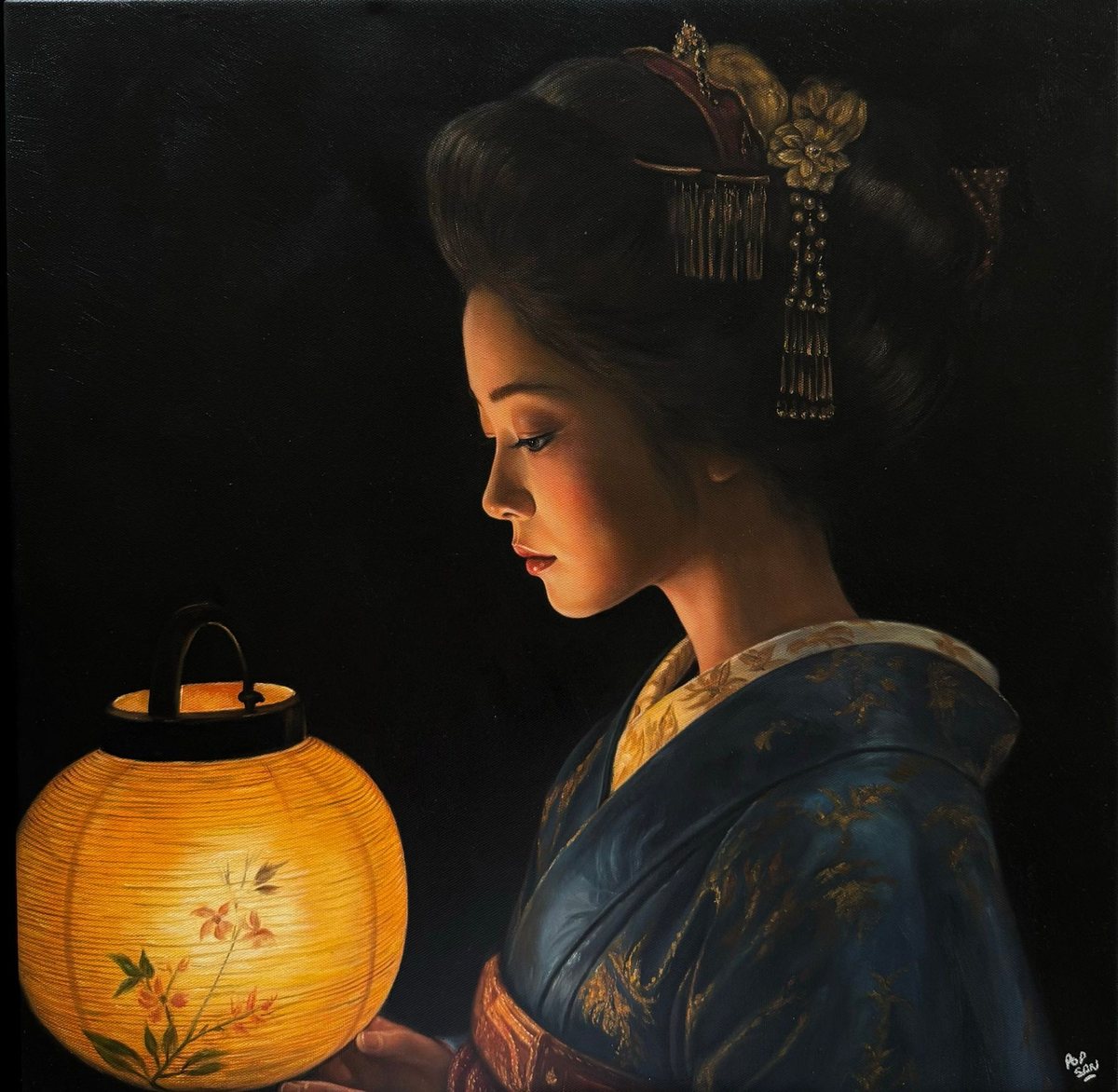
As Popsan, William San paints Japanese women in oil on canvas, stepping out of the dark. Woodblock prints spread light evenly; he keeps a single source, as Caravaggio and Georges de La Tour did, and places it inside the picture: a paper lantern, a moon cupped in two hands, a peony, a shell held to the ear. Everything else is given back to the night, and a face appears only where that light touches it.
Chiaroscuro
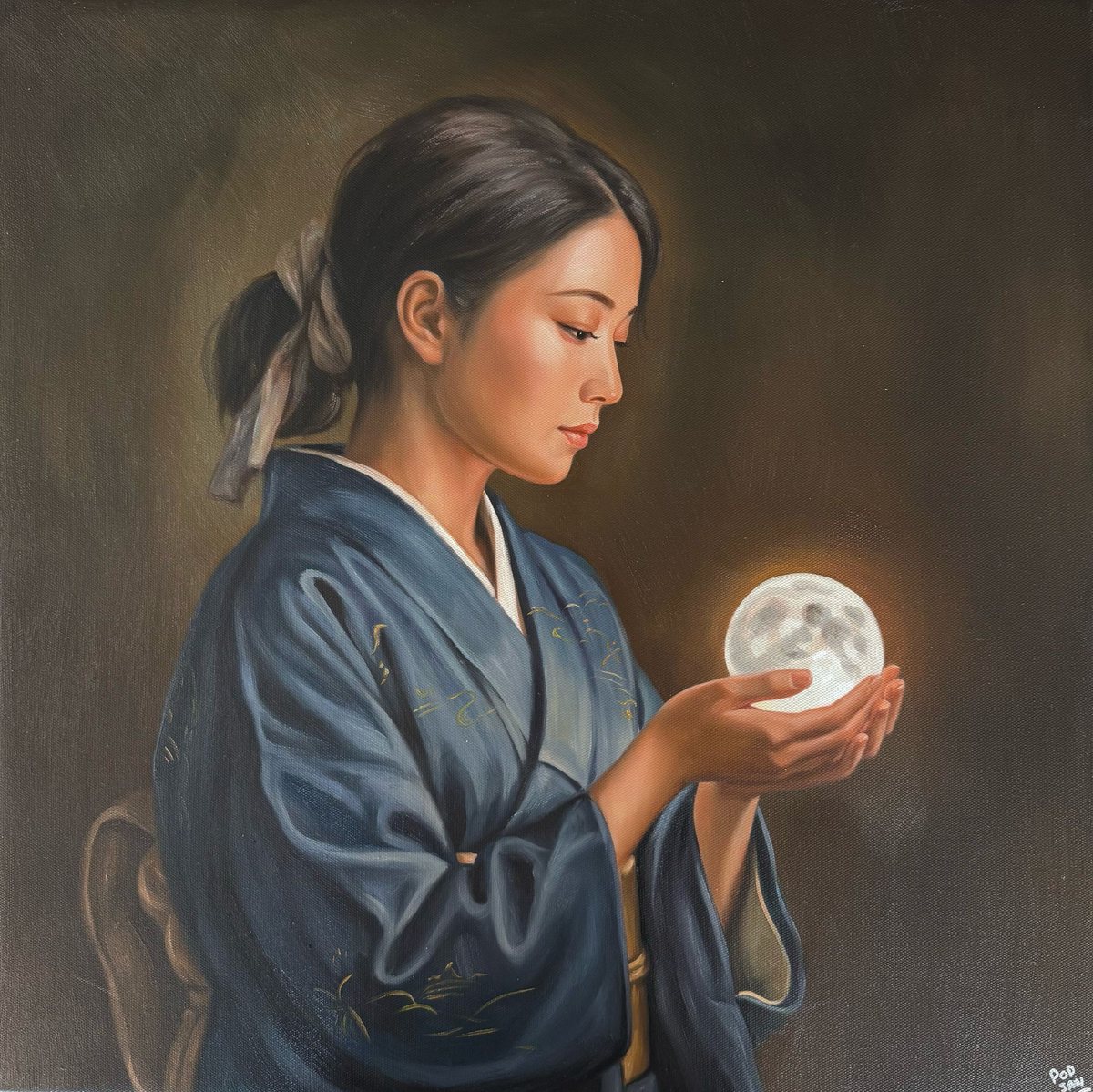
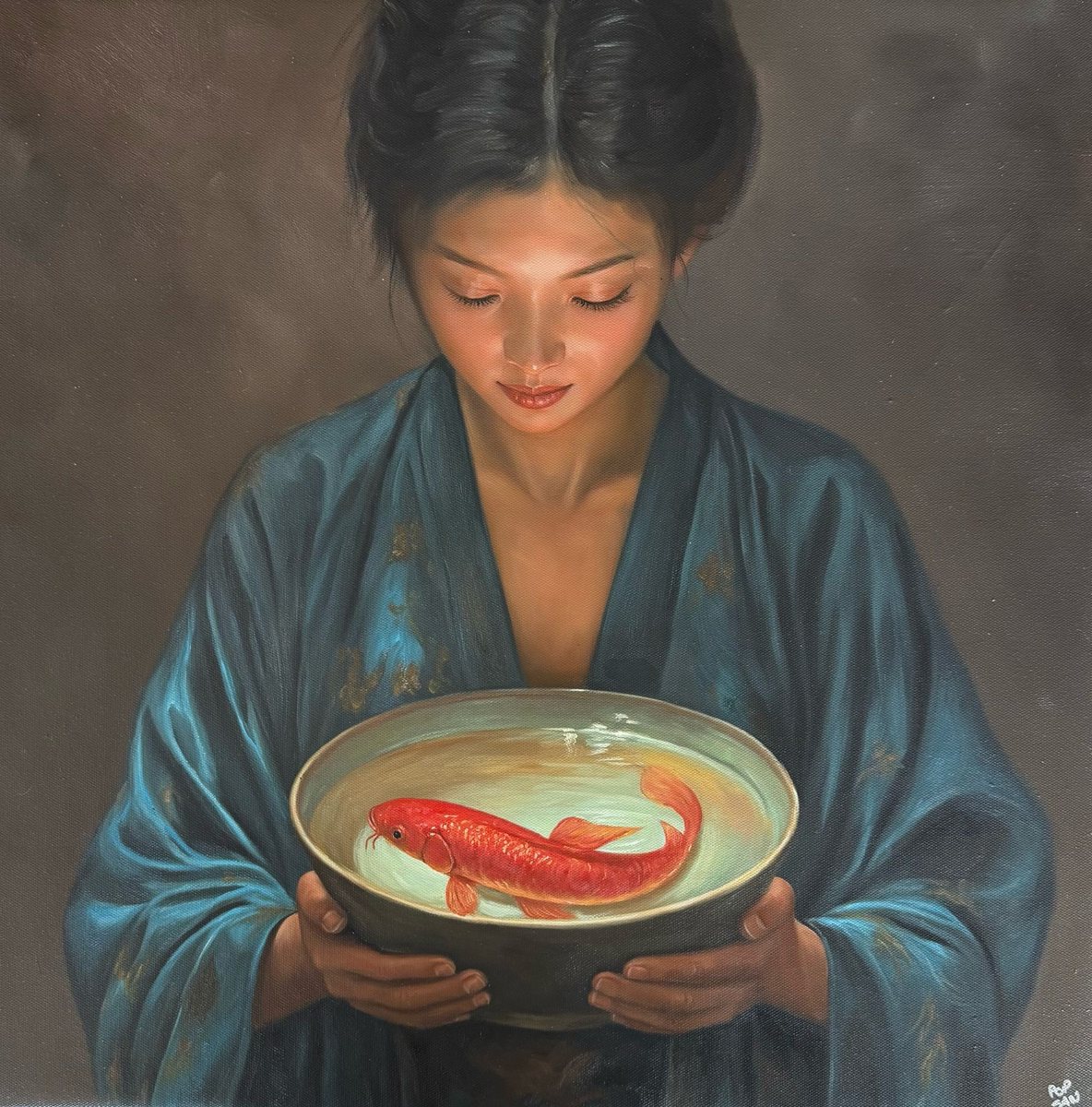
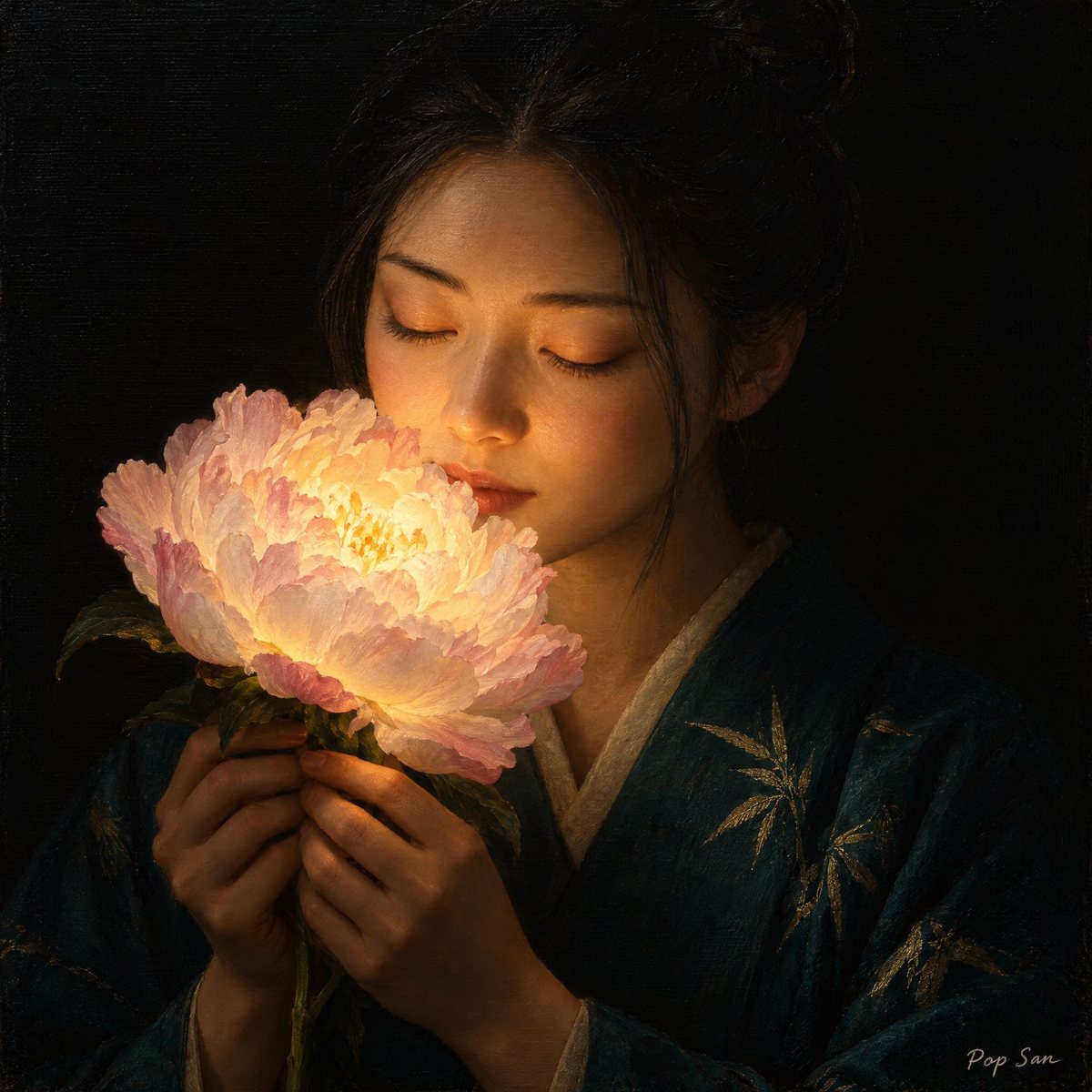
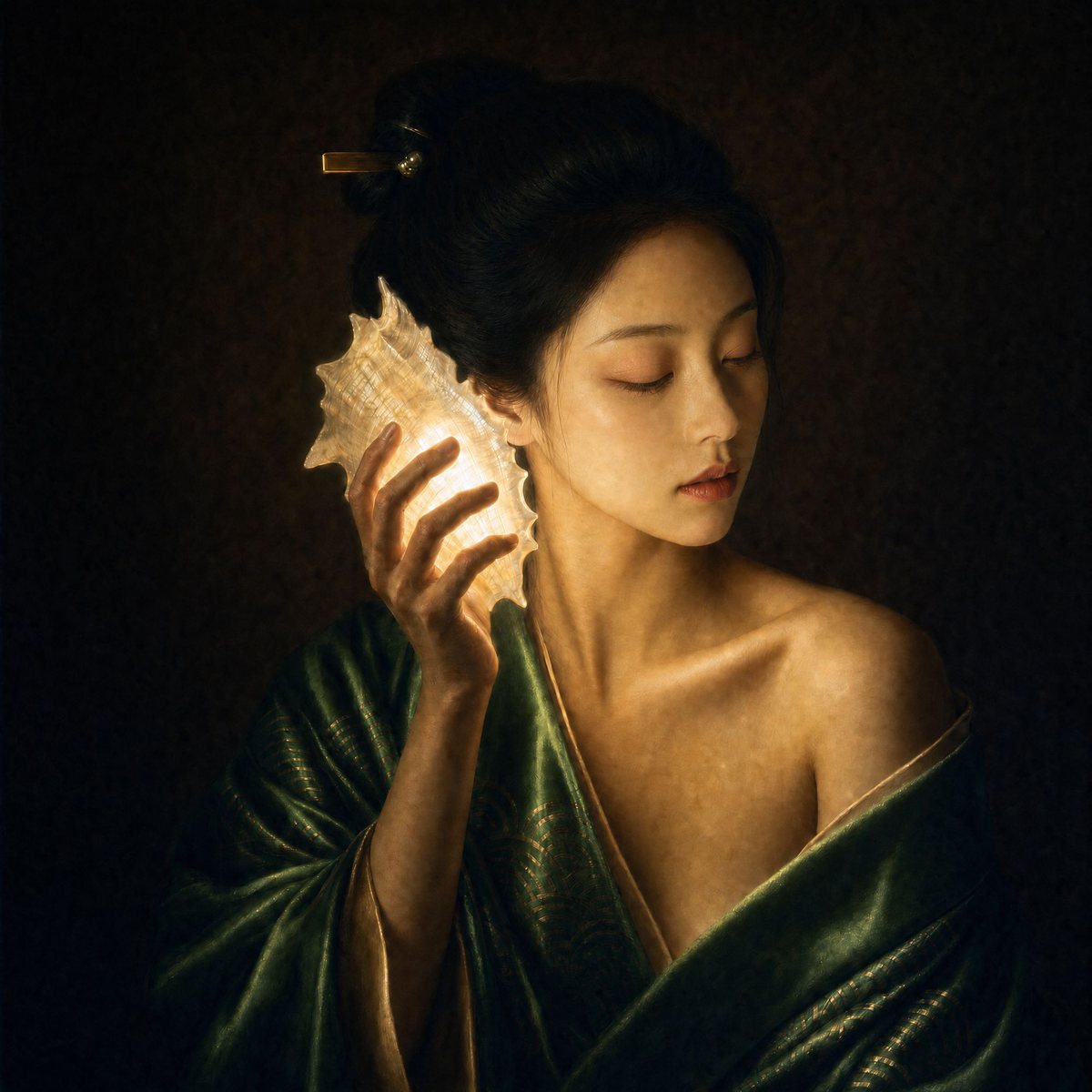
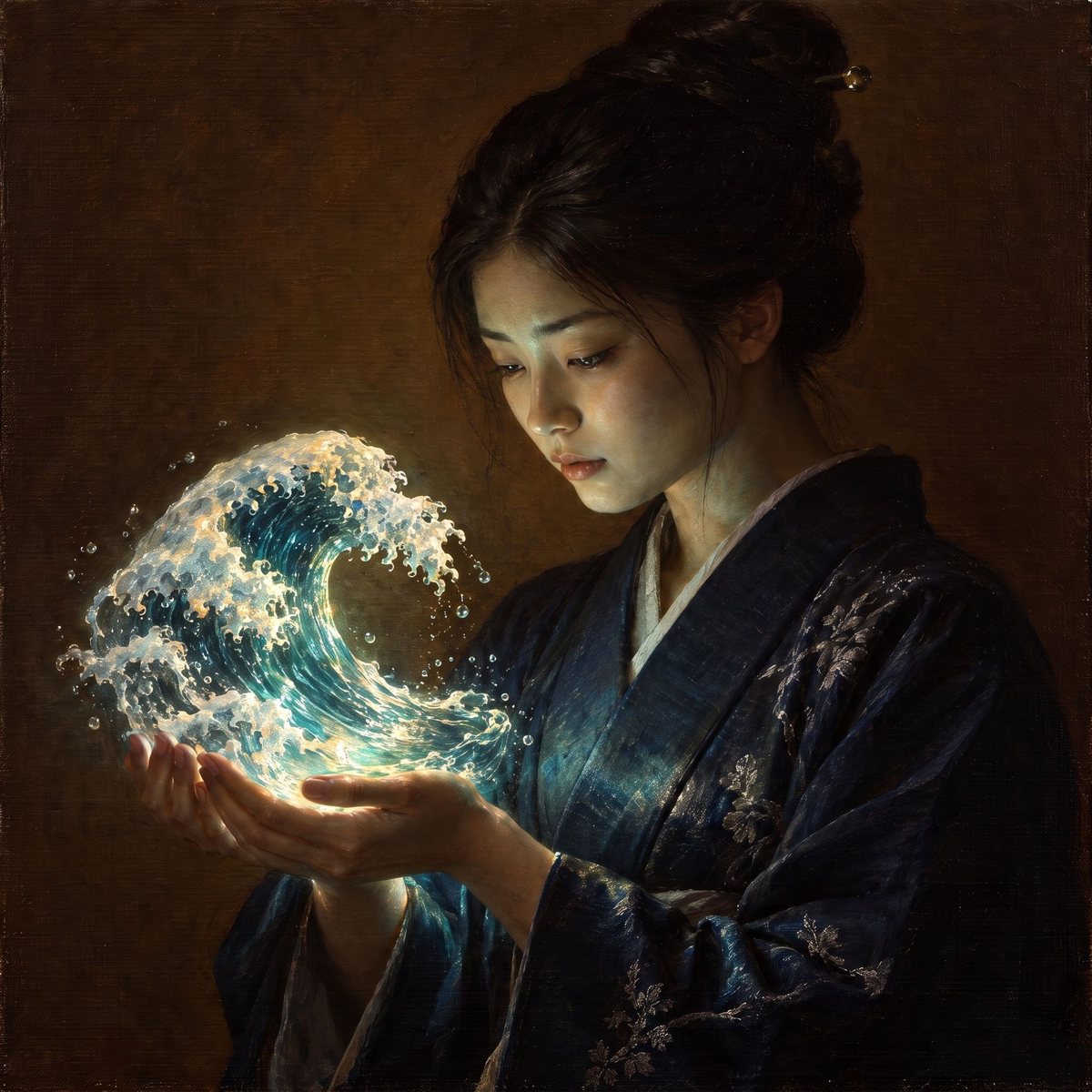
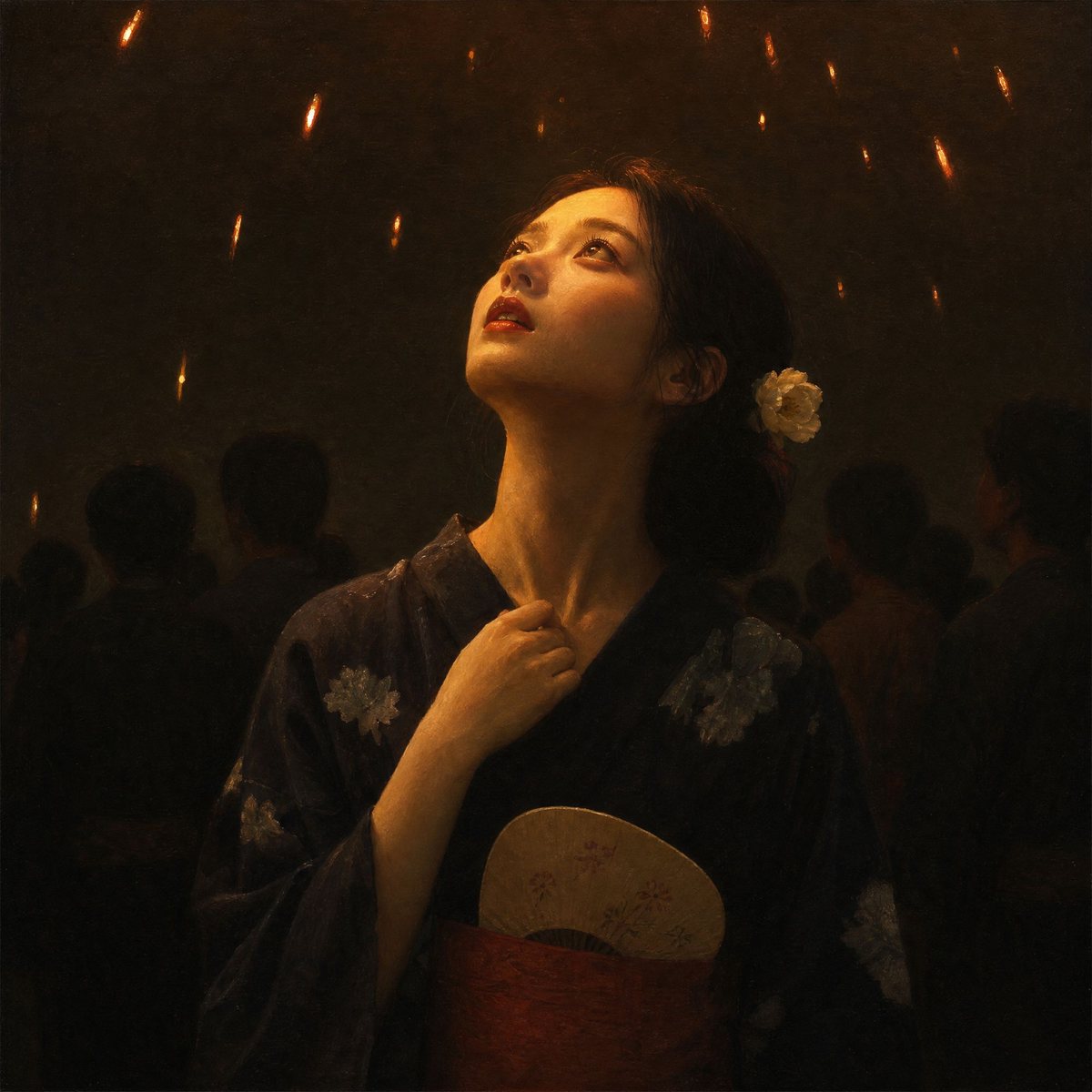
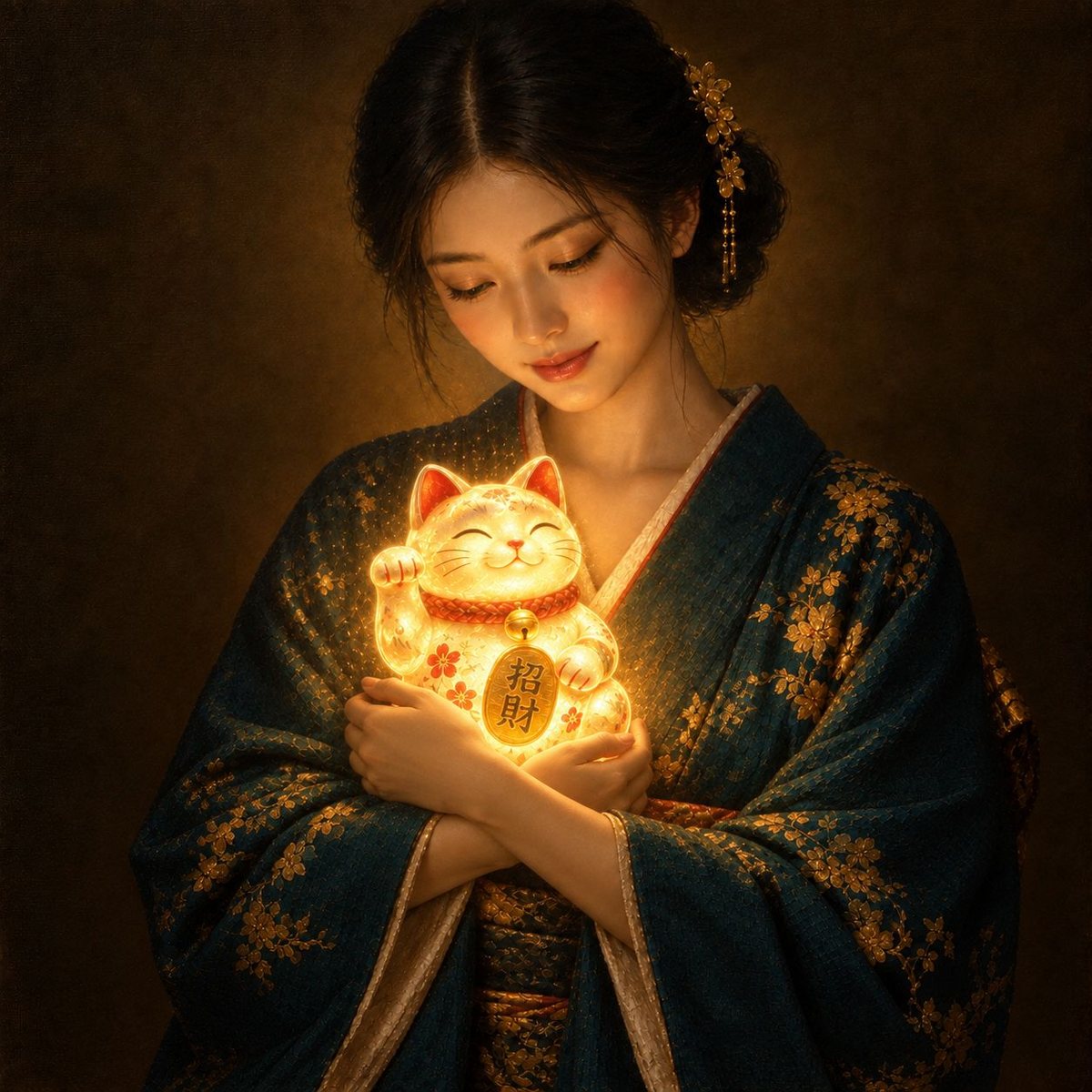
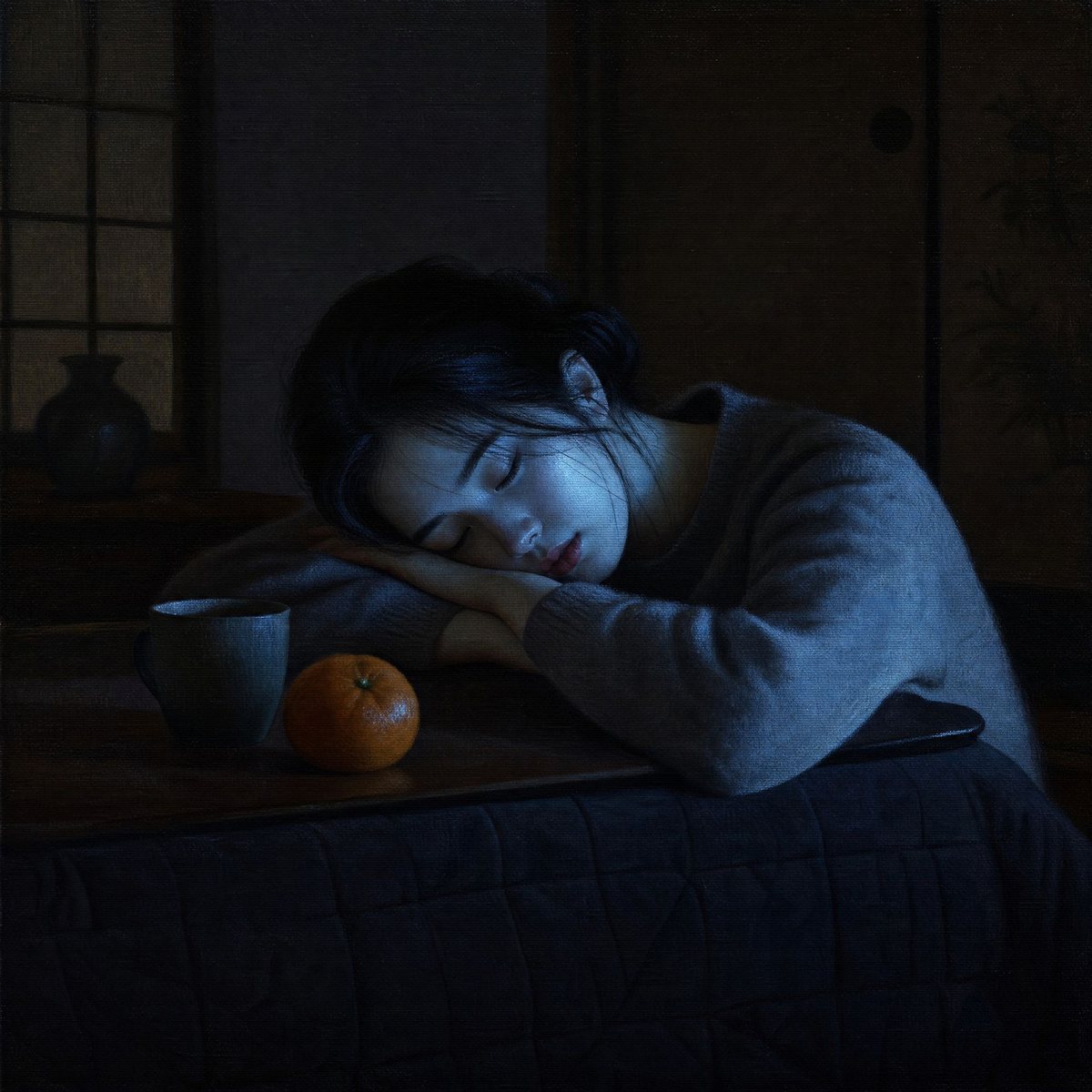
Nights
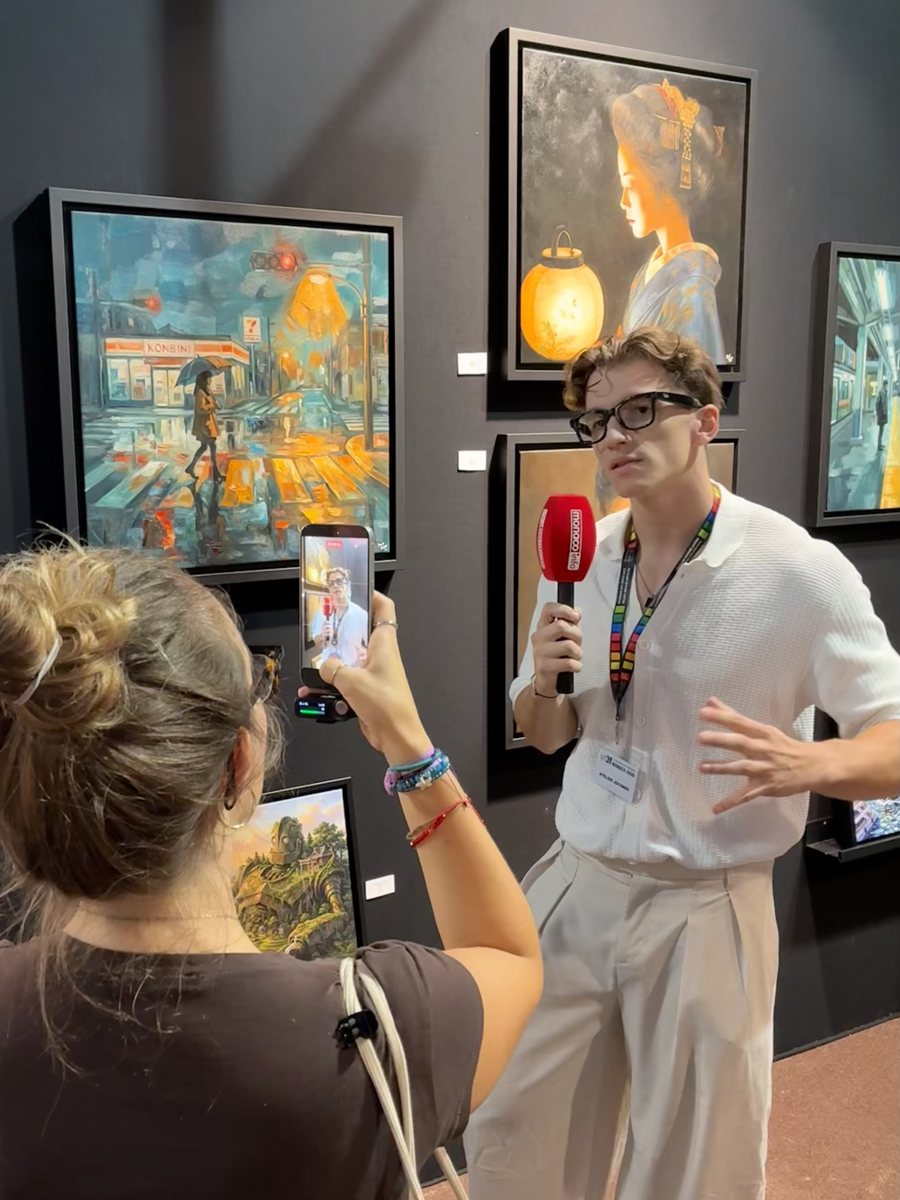
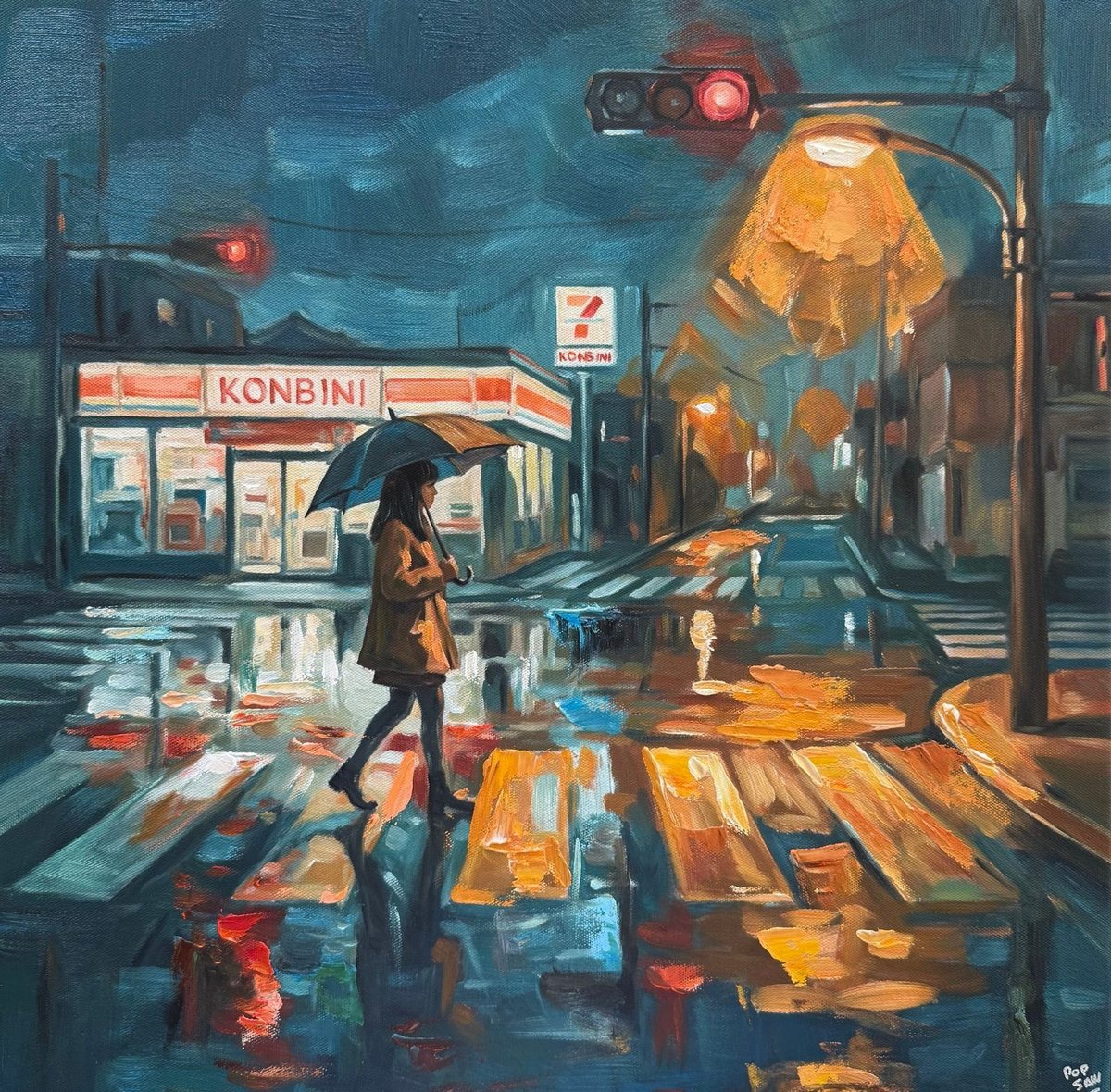
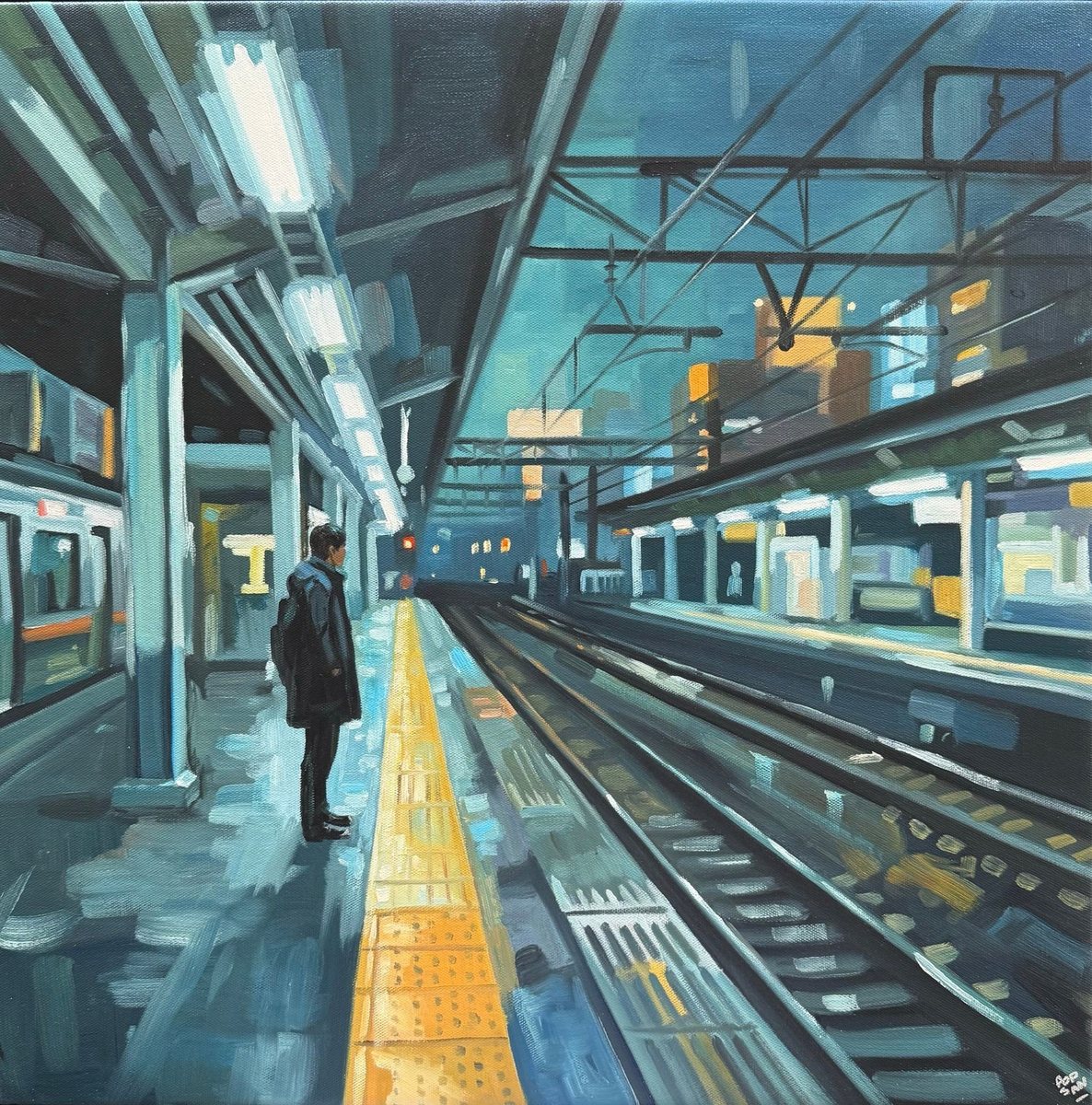
After the women holding lanterns, William San went looking for where light lives in today’s Japan. He found it in the city at night: a konbini window still lit in the rain, the neon of a platform at the hour of the last train. Tanizaki wrote it in 1933 in In Praise of Shadows: Japanese beauty lives in half-light. The lanterns have changed; William San paints the same shadow.
Kintsugi
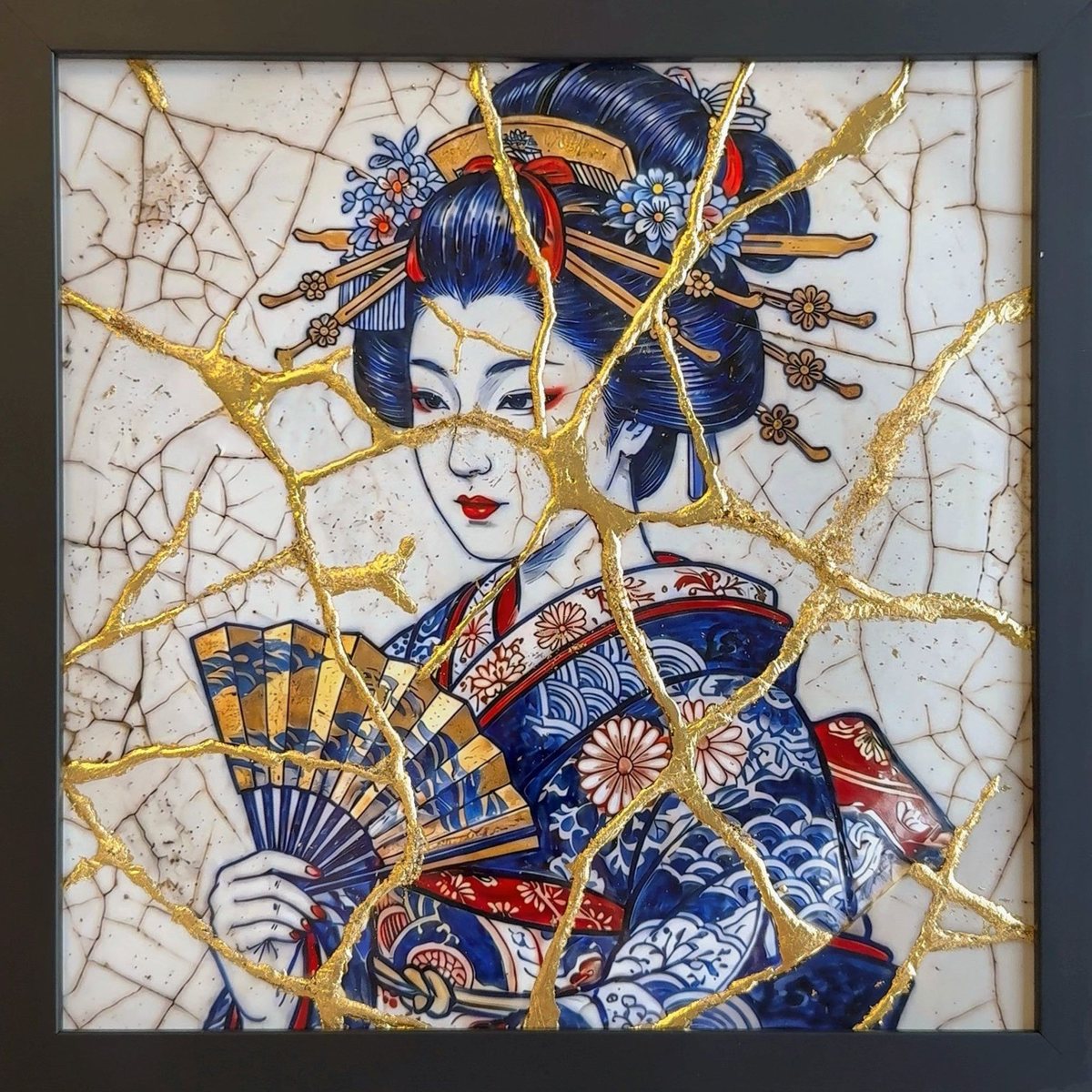
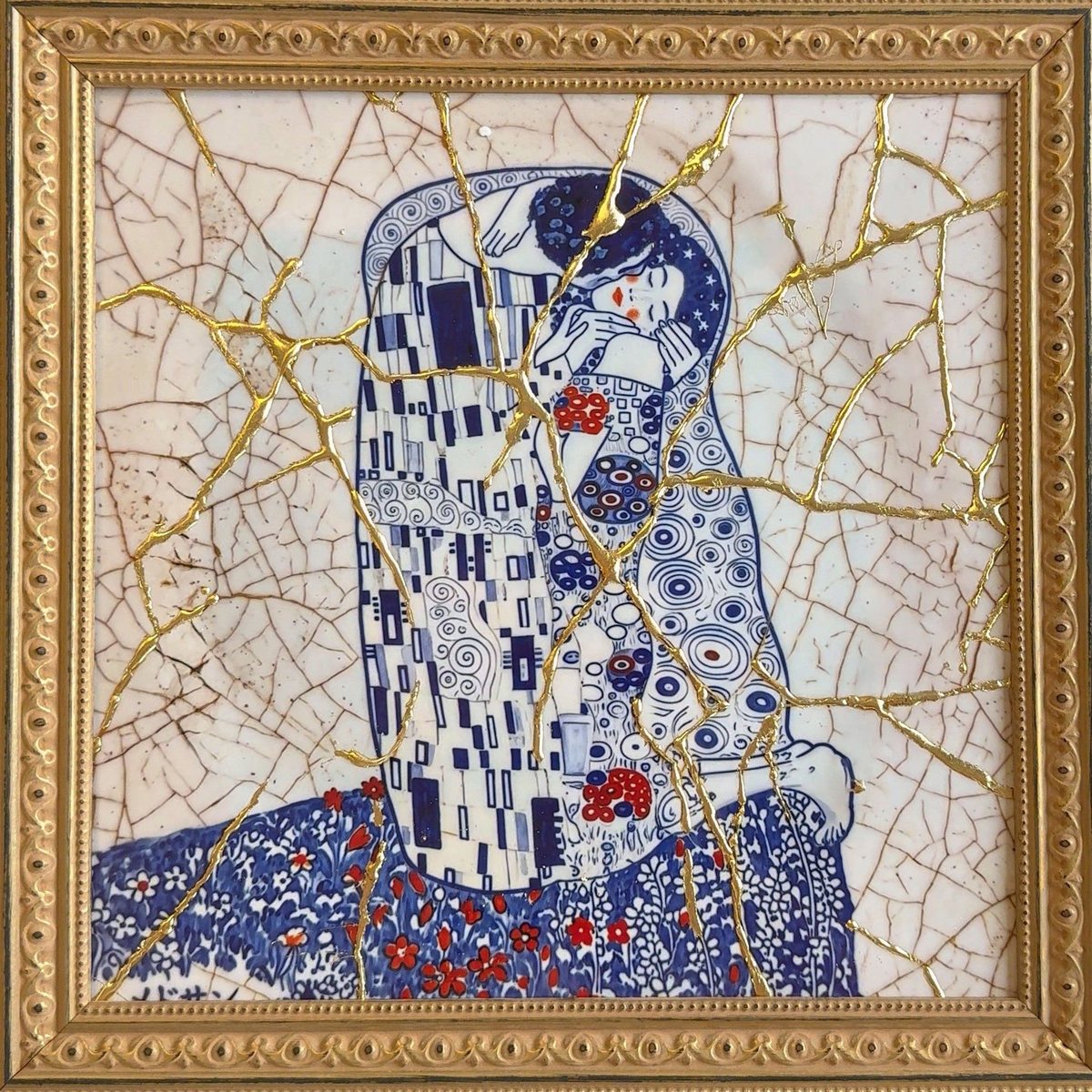
Light in the crack
In Japan, when a bowl breaks, the break is not hidden: it is mended with lacquer and gold, and becomes the most beautiful part of the object. This is kintsugi. William San made it a series. On blue-and-white glazed ceramic tiles, the porcelain that Japan and Europe have traded and copied since the seventeenth century, he brings a figure to life, then runs gold, laid by hand, along its cracks. What breaks is not lost: it is where the light catches.