art3f Monaco: my Popsan and Medsan wall, three sales and Chou’s Spine’s departure
By William San, on

On Thursday 10 September 2026, at 6.15 am, we were loading the van in Orléans. Nearly 950 kilometres later, at 6.23 pm, we were unloading it outside the Chapiteau de Fontvieille in Monaco: six metres of black wall, empty. The next day the art3f fair opened in Monaco, from 11 to 13 September, and Atelier Joconde had its stand there, with my father, Le Yack, my brother, Neo Pablo, and me. I was 22, and it was my first time exhibiting in Monaco.
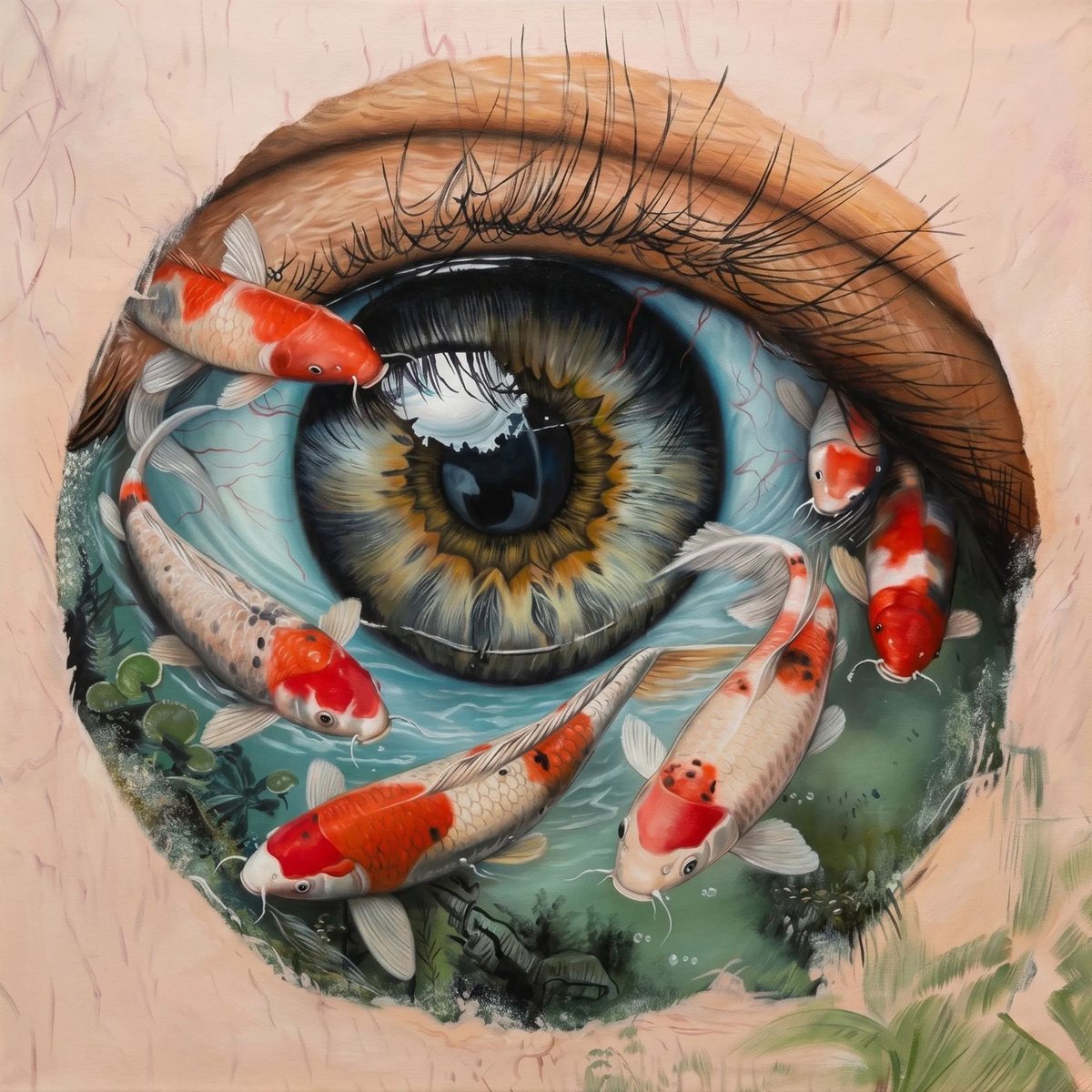
Popsan at the top, Medsan below
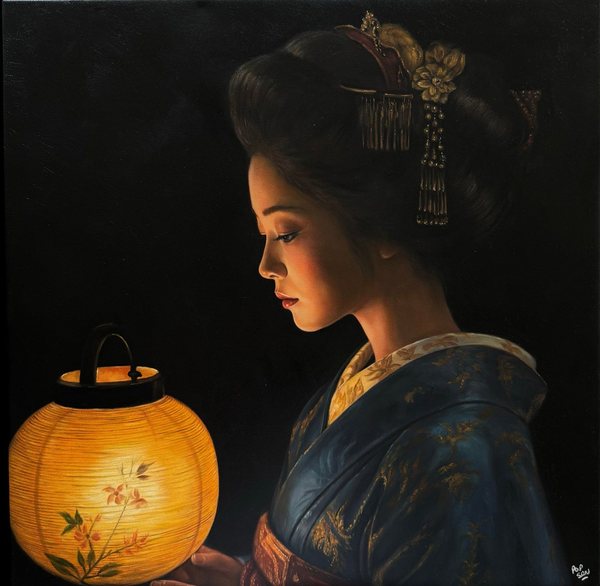
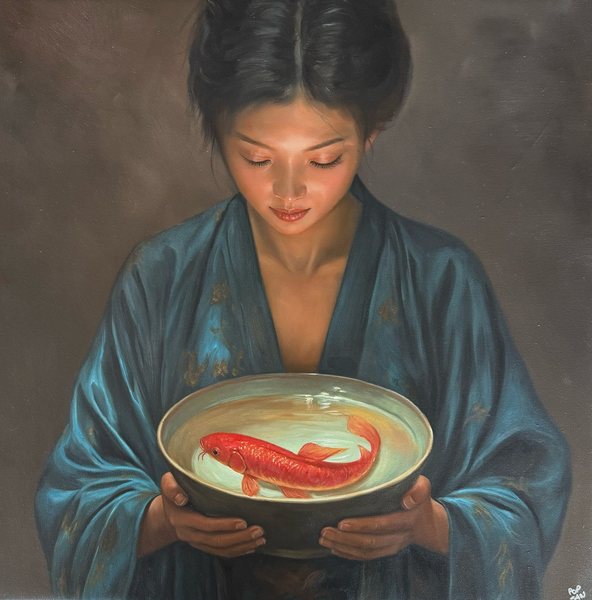
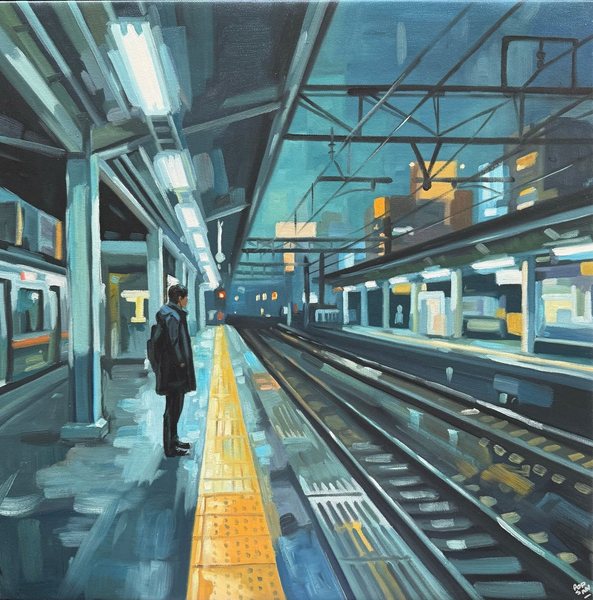
The left-hand wall of the stand was mine. At the top, the Popsan paintings, oils on canvas, 60 × 60 cm, in their black frames: Le passage de la nuit, Akari above Kingyo, and Shūden. Just below, my kintsugi Great Wave in its gilt frame. Lower still, on small black shelves, Medsan prints bearing my seal, Chou’s Spine among them. A panel on the stand introduced Medsan, next to Neo Pablo’s.
Two signatures on one wall is exactly who I am: Popsan looks for light in the shadows, Medsan turns medicine into art. And Medsan did not wait for Saturday. On the very first day, two orders came in from people who already followed me on Instagram, where Medsan was born.

That Friday at 4.30 pm, Monaco Info came to interview me in front of that wall. I wrote about it in the article on Akari.
The Saturday the wall emptied
Saturday began with a visitor choosing the two geishas, the one with the lantern and the one with the fish. At 2.13 pm I was filming myself in front of Akari to announce she had just been sold, and that sadly no one would be able to see her any more. Kingyo, my favourite piece, went with her.

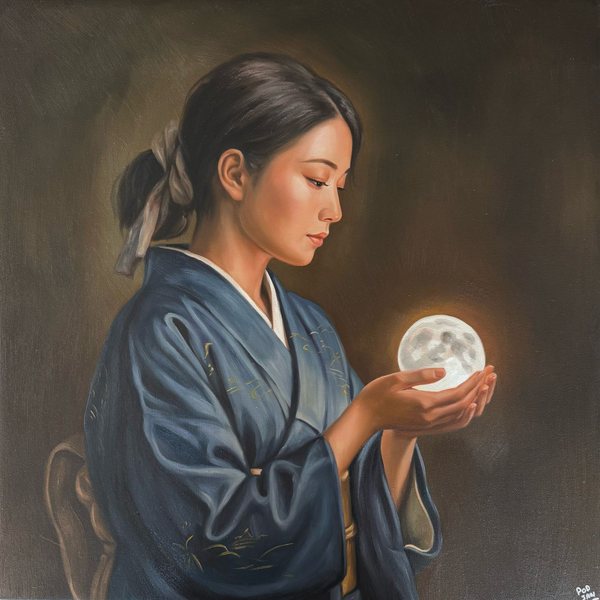
All of a sudden the wall looked a bit empty. I screwed in a hook and brought out a painting I had been keeping for later: Tsuki, a woman in a blue kimono holding a full moon in the hollow of her hands. She took the two geishas’ place for the rest of the weekend.
That evening, on our way back from dinner, we heard that the kintsugi Great Wave had sold too. I think we walked back onto the stand smiling. Three Popsan pieces left during the fair. That Saturday, handing a wrapped piece to its new owner, I said what I love to hear back: I would love a photo of the spot where you hang it.
Chou’s Spine leaves
On Sunday another piece left the wall, but not for a buyer’s home. The organiser of a Paris exhibition left the stand with Chou’s Spine, wrapped up, and two weeks later it was hanging in Paris, at “La Vie en Rose”, at the Hôtel de l’Industrie. It is a Medsan work about broken heart syndrome, and I tell its story here.
Tsuki, on the other hand, did not sell in Monaco. She came home with us and found a buyer three weeks later, at the art3f fair in Luxembourg.
At 6.55 pm on Sunday we started taking down. By 7.37 pm there was nothing left on the six metres of black wall. Four nights for the three of us, five days away from the studio, and a wall that had emptied faster than we expected.