The epileptic aura in ten works: my Epilepsy series
By William San, on

Aura Iris is an eye seen from very close. The iris is blue-grey and, on one side only, it comes apart in threads and flecks of gold. It is one of the ten works in my Epilepsy series, under the Medsan name, and it is the one about the epileptic aura, the moment someone feels a seizure beginning, sometimes before anyone around them has noticed a thing.
I am a painter, and this article is not a substitute for advice from a doctor. Its medical facts come from the NHS, the Epilepsy Society, the World Health Organization and two French sources, Inserm and the Assurance Maladie.
A breeze before the storm
The word aura came into Latin from Greek, and it meant a breeze, a breath of air. In neurology it names a sensation the person recognises, nearly always the same for them, at the start of a seizure.
For a long time the aura was described as a signal that comes before the seizure. Neurologists now see it differently. It is already the seizure itself, a focal seizure that starts in one particular area of the brain and during which the person stays aware. They know something is happening, and they will remember it afterwards. The Epilepsy Society calls it a focal aware seizure.
Depending on the area involved, an aura can take very different forms: a rising feeling in the stomach, a sense of déjà vu, a smell or taste that is not there, a sudden fear, coloured or flashing lights. It lasts from a few seconds to a few minutes. For some people it stays on its own. For others it spreads into a larger seizure, and that is why it is described as a warning.
Aura Iris and Fulgur, two eyes
Aura Iris has light bursting out on one side only. When a seizure starts at the back of the brain, in the occipital lobe, which handles sight, the aura is often visual: patches of light or colour in one part of the visual field, on the side opposite to where the seizure begins. Migraine has auras too, and the two can look alike. Only a doctor can tell them apart.
Fulgur is Latin for lightning. A whole storm sits inside a grey iris, and a golden bolt cuts across the pupil. The work is about photosensitive epilepsy, where flashing light can set off a seizure. It affects only a small share of people with epilepsy, and the usual trigger rates lie between 3 and 30 flashes a second.
One seizure, from start to finish
A seizure is a sudden, excessive burst of electrical activity in a large group of brain cells at once. Aurora shows it from a distance. A blue-green brain sits on the horizon, under curtains of green and violet light, with the northern lights rising out of it. You cannot see the electrical storm. Here it becomes a sky.

Turbo Diet is a wheat field whose ears form a brain, flattened all at once by a gust of wind. It is the seizure spreading across the cortex. Filum Aureum weaves a red brain from taut threads, one knot of which comes undone in a burst of gold. Arbor Vitae sends the seizure up a pine-needled tree like rising sap, and the roots of the tree are a brain. The title is a real anatomical term. The arbor vitae, the “tree of life”, is the white matter of the cerebellum, which branches like a tree when you cut it down the middle.
In Exodus, a network of grey neurons suddenly lets go of a flight of white cranes, folded like paper cranes. This is the synchronised discharge, cells all leaving at once. In Japan people fold a thousand paper cranes, a senbazuru, to wish someone who is ill a recovery.

Kintsugi Brain shows a brain run through with cracks filled with gold, in the manner of kintsugi, the Japanese art of mending ceramics with gold, which I wrote about in connection with my wave with golden cracks. The seizure is a break here, but a break that does not destroy.
Ictus is Latin for a blow. Neurologists still speak of the ictal phase for the seizure itself and the post-ictal phase for what follows. The work catches a brain at the moment of impact, one edge burning while the rest holds.
Vertigo, finally, is an eye drawn into a golden spiral. It is about absence seizures, where awareness switches off for a few seconds: the gaze goes blank and the person does not respond. Absences are most common in children.
What epilepsy is
More than 600,000 people are treated for epilepsy in France, where I live. It is not one disease but a group of them, which have seizures in common. It can start at any age, in childhood or after 60. With the right treatment, the World Health Organization puts the share of people who could become seizure-free at up to 70%.
The best-known seizure, with a fall and convulsions, is the tonic-clonic seizure. It usually lasts a few minutes. If you are with someone having one, do not hold them down, cushion their head with something soft, and put nothing in their mouth. Once the jerking stops, roll them onto their side into the recovery position and stay with them: they will often be confused and very tired. The NHS says to call 999 if it is their first seizure, if it lasts longer than is usual for them, or more than five minutes if you do not know, if they do not recover as usual or have another seizure without recovering in between, or if they have had three or more in 24 hours.
Why a whole series
I was passionate about medicine long before Medsan, which I started because the person I was with back then, a medical student, found no anatomical painting beautiful. The aim now is for Medsan to become a contemporary artist’s signature.
Epilepsy is the only illness I have given a whole series to. Elsewhere in Medsan, one illness fits into one painting. Epilepsy has ten works, seven of them showing the brain or its neurons and three an eye. Most of their titles are Latin, like Fulgur or Ictus. They give you a lead. They do not impose a reading.
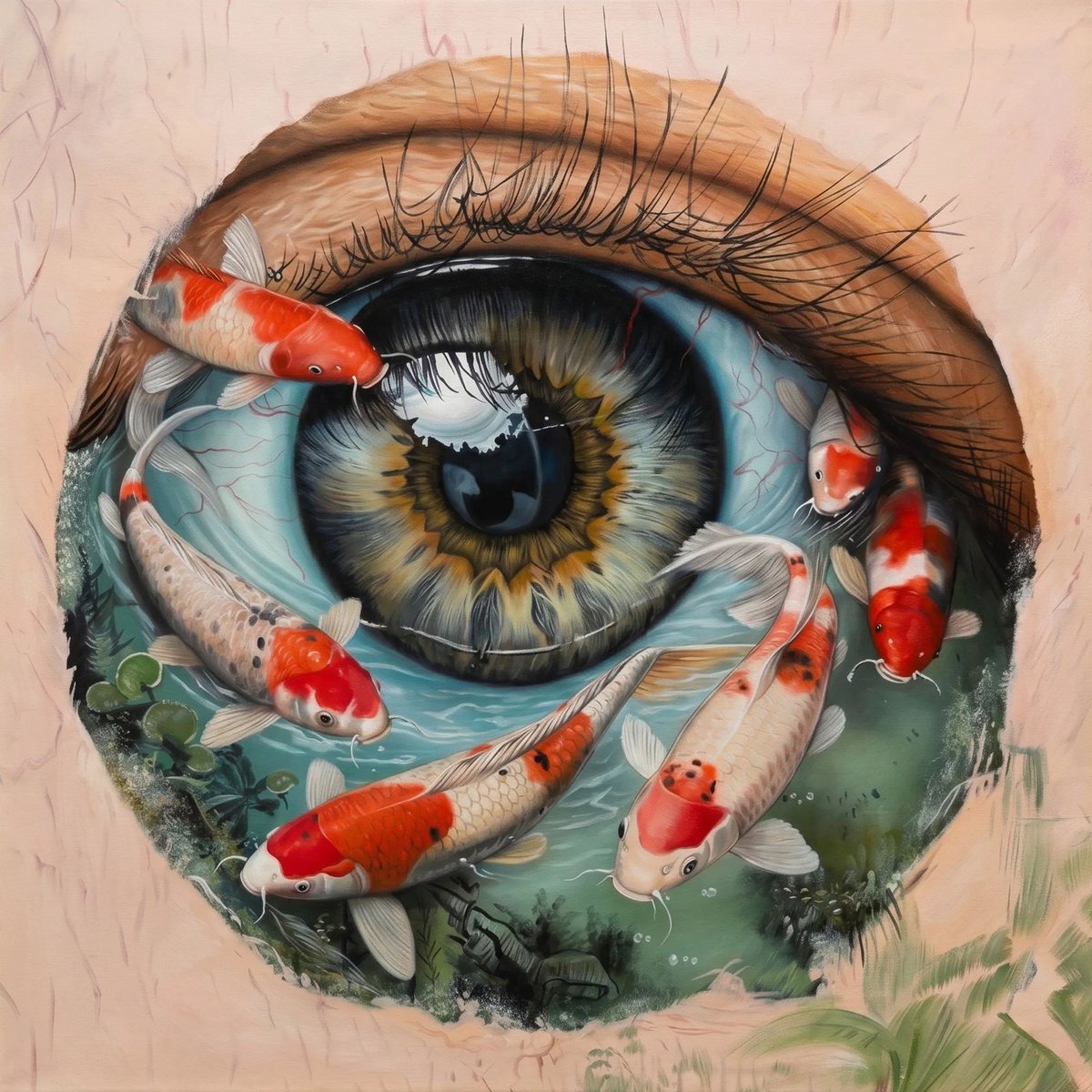
The four Medsan works on the brain that are for sale, including Imari Cortex, about stroke, are gathered in the guide to brain paintings. Another eye, the one with floaters, is in the piece on Koi Look, a work you will also find in the guide to eye paintings, and the rest of Medsan is on the Medsan page.
The ten works of the Epilepsy series are gathered, with their texts, in the med-san.art portfolio. They are not in the shop. Each one exists and is available on request, if you write to me.